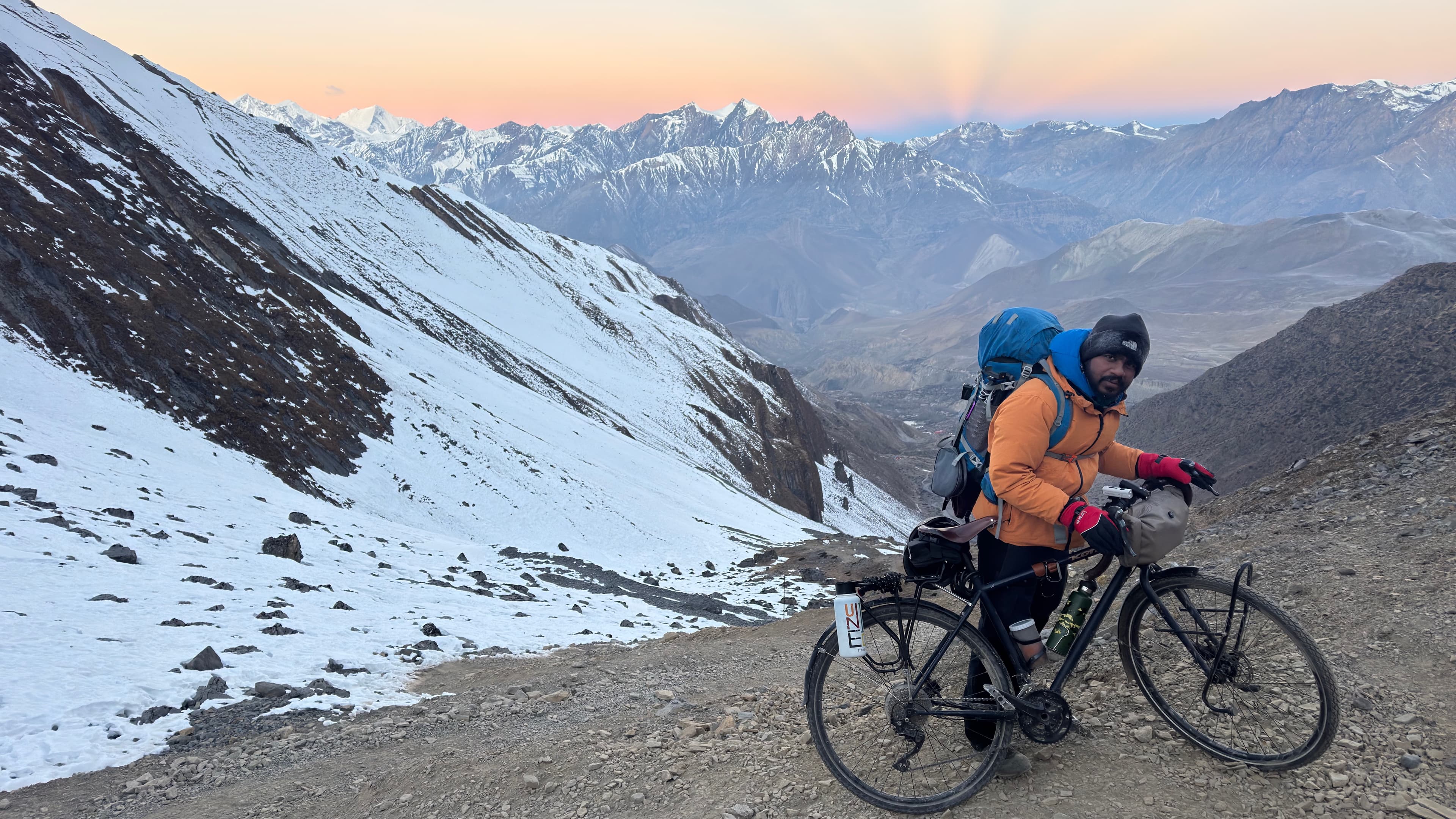
The ACT attempt happened at winter's peak, and I approached Thorong La from the harder side for a crossing, effectively the wrong side if your goal is a clean, predictable pass day.
On paper it still looks like the Annapurna Circuit. In reality, winter changes the entire equation. Above 4,000 meters, you're not just managing altitude. You're managing wind, frozen shade, delayed sun, and how quickly cold becomes a safety problem. With a bicycle in the mix, that risk multiplies because your hands don't get to rest. You're pushing, gripping, braking, constantly exposed.
I rode Kathmandu to Muktinath, then pushed on to Thorong Phedi (around 4,200m) and lined up the pass attempt early morning. The wind was biting and the sun didn't show up when it needed to. My hands started freezing in a way that wasn't normal discomfort, it was a warning that sensation and control were going to drop fast if I kept going. And at that altitude, once things start slipping, they don't improve because you want it more.
By around 8am, the decision was clear. I turned back. Down by around 9:30. No drama, no almost. Just a clean call.
I'm writing this because the attempt taught me something precise: in the Himalayas, toughness is not the metric. Judgment is. Route choice, exposure time, and winter conditions matter as much as fitness. Turning back wasn't a failure, it was part of doing this responsibly, and it gave me clarity on what needs to change before I try again.